

The U.S. functional beverage market is moving beyond a vague promise of being “better for you” toward a competition defined by specific occasions and benefits. Food Dive’s review of six major brands shows category boundaries being redrawn around electrolytes, protein, naturally occurring caffeine, focus, and everyday hydration. Japanese beverage importers should not respond by adding the ingredient of the moment. The stronger strategy is to identify occasions that established brands have not fully solved, then translate the strengths of Japanese tea, grains, fruit, and fermentation into an experience U.S. consumers can understand and repeat.
Contents
1. The New Competitive Map Shown by Six Major Brands
2. Inventory Japanese Assets as Experiences, Not Functions
3. Four Axes for Finding White Space
4. Differentiate With a Benefit Blueprint, Not an Ingredient Race
5. Change the Winning Model by Channel
6. Build Supply, Quality, and Economics Into the Concept
7. A 12-Week Proof Plan and the Next Move
1. The New Competitive Map Shown by Six Major Brands
Food Dive reported that major companies, including PepsiCo and Coca-Cola, are adding functional ingredients in response to health and wellness demand. Pure Leaf introduced a sparkling tea positioned around balanced energy and focus rather than extreme performance. Capri Sun entered electrolytes for children. Bodyarmor moved sparkling sports hydration into daily routines. Premier Protein stepped into protein soda. Muscle Milk increased protein while removing artificial colors, sweeteners, and flavors, and Gatorade broadened its position from sports toward everyday hydration.
The shared move is not simply adding ingredients. These brands are transferring existing trust into a new occasion: sports hydration becomes daily hydration, protein shakes move toward soda, and tea moves toward calm focus. As the category becomes crowded, the presence of one ingredient is less differentiating. The decisive question is who drinks the product, at what moment, and which existing beverage it replaces.
Japanese companies do not need to match the media budgets or shelf leverage of global brands. They can focus on smaller spaces left behind by mass-market positioning: a lower-stimulation afternoon, an unsweetened meal occasion, hydration unrelated to athletics, or a relaxed nonalcoholic evening. White space is often not a new ingredient. It is a person and moment not adequately served by the existing benefit.
2. Inventory Japanese Assets as Experiences, Not Functions
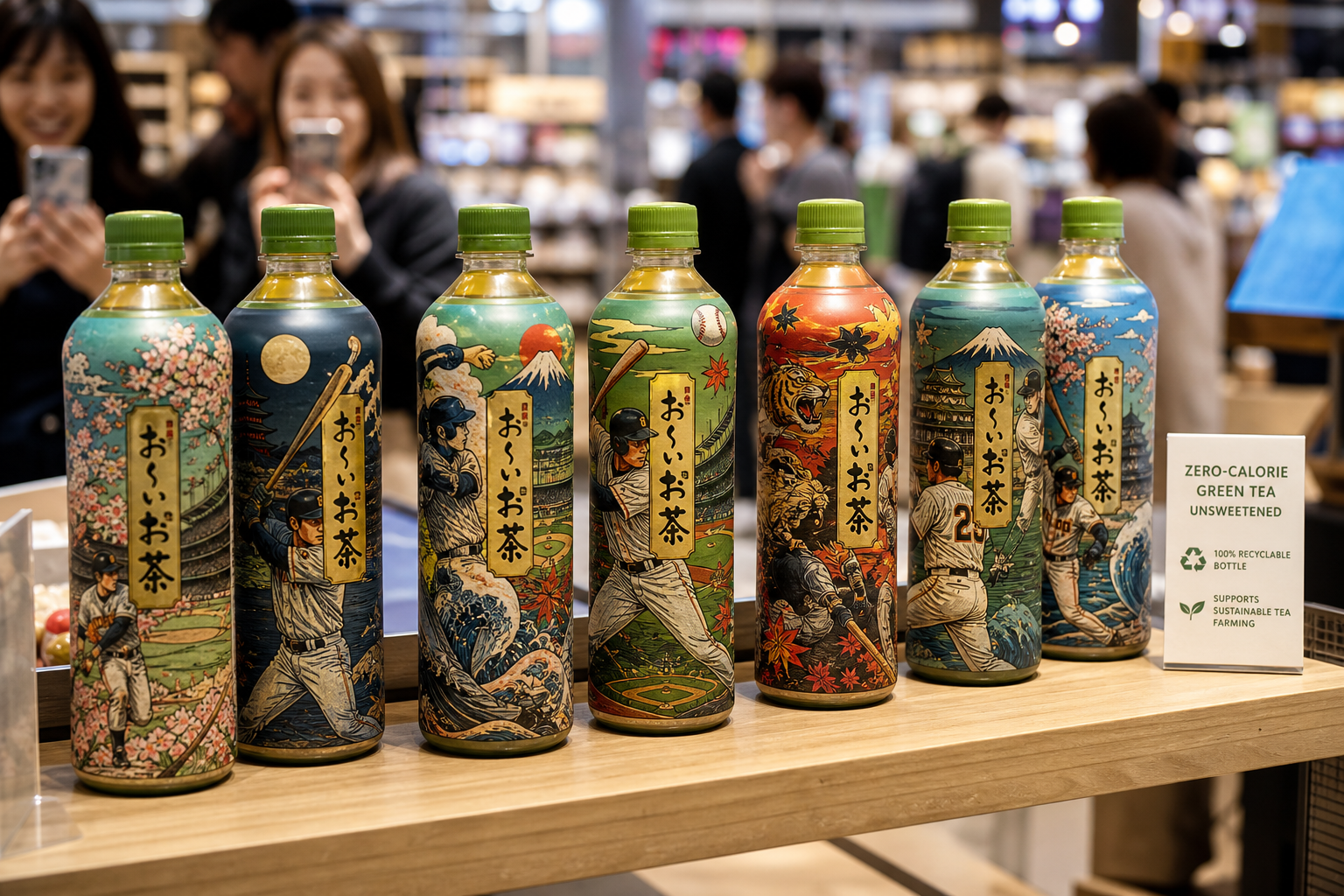
Japan offers green tea, hojicha, genmaicha, and barley tea with different aroma, caffeine, meal-pairing, and hot-cold profiles. Rising matcha awareness does not mean every concept should use matcha. Hojicha can offer roasted aroma and a gentler experience; barley tea can support unsweetened, meal-friendly use across seasons; and genmaicha can occupy a midpoint between grain aroma and green tea. Translate tradition into consumer decision variables such as taste, time of day, temperature, food pairing, and stimulation level.
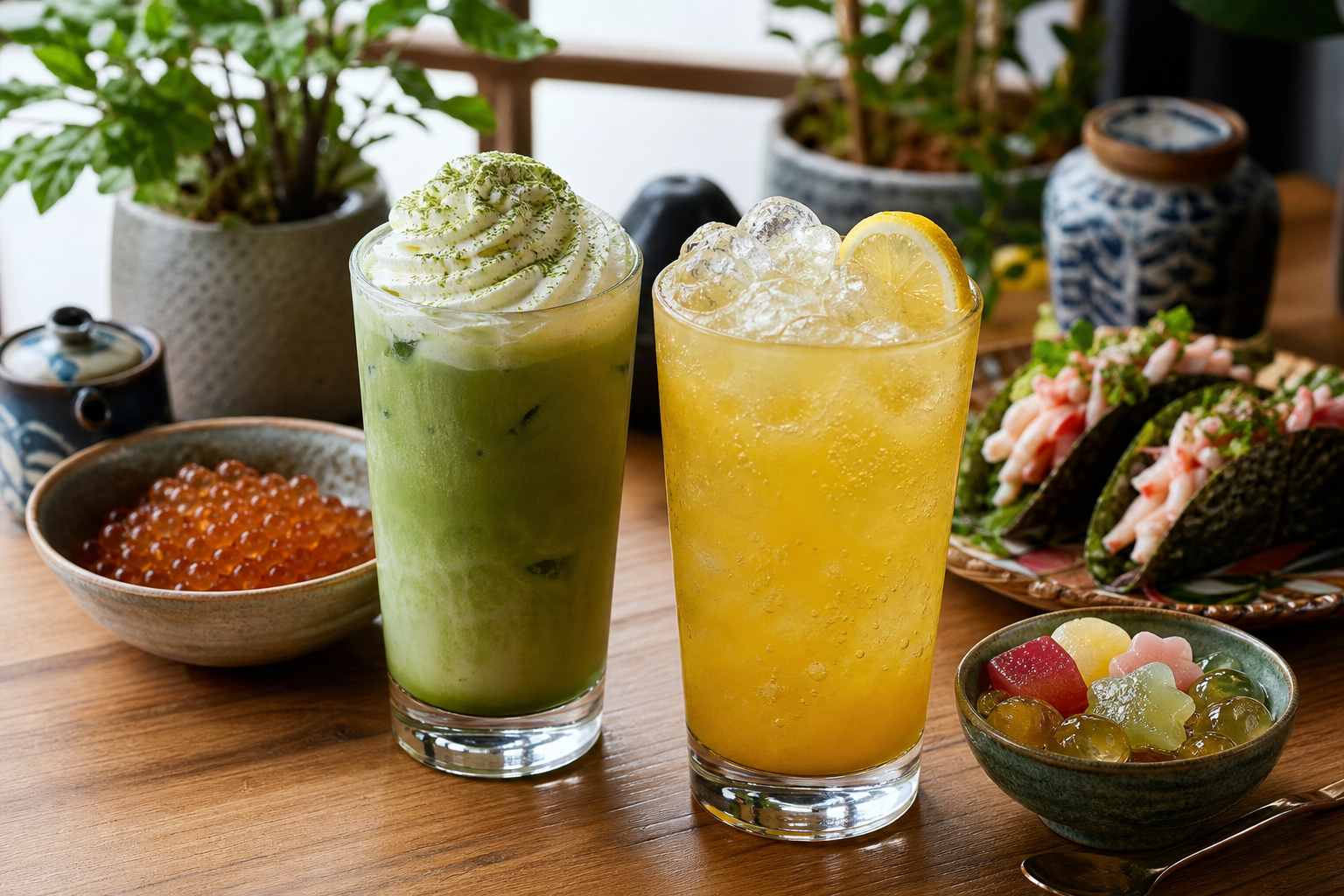
Yuzu, sudachi, and ume can create aroma and acidity without depending on heavy sweetness. Rather than positioning them only as exotic Japanese flavors, define where they outperform lemon or lime in water, tea, sparkling drinks, or nonalcoholic occasions. Aroma, acidity, juice content, sweetener, color, and acceptable sediment all require design. A favorable tasting-room response has little value if it cannot be reproduced after scale production and transport.
Fermented and grain-based options may include rice-koji drinks, amazake, or vinegar-based beverages, but U.S. consumers will not necessarily infer the same benefit from the same terminology. Fermentation should not become a universal health symbol. Explain flavor, satiety, process, and occasion. Any implication about live cultures or a physiological effect must match the actual product and evidence. Heritage strengthens a story; it does not substitute for substantiation.
3. Four Axes for Finding White Space
The first axis is occasion: breakfast replacement, commute, afternoon focus, meals, exercise, or a nonalcoholic evening. For each occasion, identify where existing products are too sweet, too stimulating, too large, too expensive, or too aggressive in their promise. “Afternoon focus” is not limited to high-caffeine energy drinks. Some consumers may want aroma as a transition, less carbonation, easier meeting-room use, or lower concern about late-day sleep. Hojicha or lower-caffeine tea becomes relevant only when that specific need is validated.
The second axis is sensory experience. Functional drinks are often compared by ingredient panels, but repeat purchase depends on taste, aroma, aftertaste, texture, and sweetness. Unsweetened Japanese tea can be a destination for consumers leaving sweeter drinks, while bitterness and roasted notes may be unfamiliar to others. Unsweetened, lightly sweetened, and fruit-accented entries can form a progression within the same benefit without weakening the brand core.
The third axis is benefit intensity, and the fourth is format. A gentle daily drink and a product used during demanding exercise require different ingredient levels and communication. Cans, PET bottles, concentrates, powders, and tea bags differ in freight, stability, effort, and customization. Comparing finished beverage imports with concentrate, powder, ingredient supply, or U.S. filling may reveal an economic and freshness white space of its own.
4. Differentiate With a Benefit Blueprint, Not an Ingredient Race
In practical development, choose one primary benefit and no more than one secondary benefit. Hydration, calm focus, meal compatibility, satiety, or refreshment can serve as the center, proven through taste and format. A long list of electrolytes, caffeine, vitamins, and fiber may appear multifunctional while obscuring the actual job. In a market where large brands can add more, a Japanese product can become recognizable by delivering fewer promises consistently.
A benefit blueprint should name the audience, occasion, expectation, evidence, sensory profile, and language to avoid. For “a calm afternoon reset,” for example, the audience could be office workers avoiding aggressive energy drinks; the sensory cue could be roasted aroma with low sweetness; the format could be a slim can; the evidence could include measured caffeine and ingredient documentation; and prohibited language would include treatment or cognitive-improvement implications. One blueprint keeps formulation, design, sales, and advertising aligned.
Claims and nutrition language should be reviewed with qualified professionals. Japanese expressions suggesting balance, cleansing, or circulation may produce unintended health interpretations when translated literally. Supplier documentation should be supplemented with the final formulation, delivered amount, stability, and shelf-life behavior. Packaging and advertising must stay inside the same evidentiary boundary.
5. Change the Winning Model by Channel
Natural and specialty retail can explain unfamiliar flavor and process, making it useful for early sampling and learning. Its premium audience should not be mistaken for the entire U.S. market. Mainstream grocery requires instant benefit comprehension, price logic, and a deliberate shelf choice. The Asian aisle can start discovery, but testing should also occur where the real competitors sit, including tea, sports hydration, functional beverages, and nonalcoholic drinks.
Foodservice creates opportunities for concentrates, syrups, powders, and tea bags as well as finished drinks. Cafes can test Japanese ingredients in seasonal drinks and nonalcoholic cocktails, collecting rapid feedback. Restaurants can position barley tea, hojicha, or yuzu sparkling drinks as unsweetened or lower-sugar meal companions rather than only as wellness products. The buyer discussion should include labor, extraction consistency, waste, training, and cost per finished serving.
E-commerce offers more room to explain the product but makes beverage weight expensive. Discovery packs, mixed flavors, and subscriptions can help trial, yet repeat economics must work after shipping. Concentrate, powder, and tea bags improve logistics and let consumers adjust strength and temperature. A brand can assign different jobs to a convenient ready-to-drink product and a lighter, more economical format.
6. Build Supply, Quality, and Economics Into the Concept
Tea and fruit vary by harvest, processing, and storage. Define raw-material specifications, backup origins, blending policy, and lot testing before demand expands. For expensive ingredients such as matcha or specialty juice, agree in advance whether volume, formulation, or price will be protected during cost inflation. Functional additions can change taste, sediment, light and heat stability, or package interaction, so shelf-life testing must use the final product and container.
Finished beverages transport a great deal of water, increasing the importance of ocean and domestic freight. Glass offers weight and breakage alongside its premium feel; cans provide light protection and rapid chilling; PET supports portability. Japanese filling may be practical during a small launch, while concentrate imports and U.S. filling may become attractive at scale. Local production must still reproduce sensory and quality standards, so it is an operating model rather than a freight shortcut.
The margin model should include raw materials, manufacturing, packaging, international transport, duties and fees, storage, channel margins, promotion, and write-offs. Work backward from a credible retail price and test which promotion frequency preserves contribution. Introductory discounting should not become the permanent value proposition. Separate pilot cost from projected scale cost and make the conditions for reaching the latter transparent to buyers.
7. A 12-Week Proof Plan and the Next Move
During the first four weeks, define roughly five occasions and observe the competitive shelf. Compare audience, time, sweetness, stimulation, volume, price, and format rather than ingredients alone. Match candidate Japanese beverages to the unmet conditions, then conduct an initial screen for labeling, evidence, raw-material stability, minimums, and logistics. Attractive concepts that lack executable support should remain in a future pipeline.
During the next four weeks, test a prototype or existing SKU with one primary benefit. Measure not only purchase intent but time of use, replacement beverage, sweetness, temperature, volume, price, and whether the intended benefit was understood. Show the same blueprint to retailers, cafes, and distributors and ask about shelf or menu placement, case pack, sampling, and reorder terms. If consumer preference and channel practicality conflict, state the tradeoff and redesign deliberately.
In the final four weeks, run a limited sale and track sampling conversion, second purchase, SKU contribution, damage, flavor language in reviews, and actual use occasions. Novel functional drinks can win trial, so repeat and frequency deserve extra weight. umamill’s broad lineup of roughly 7,000 Japanese food SKUs can help businesses compare tea, fruit, fermented, powdered, and food-pairing options across categories. Before adding an ingredient, choose one time of day that remains insufficiently served.
- Define who drinks the product, when, and instead of what before selecting ingredients.
- Choose one primary benefit and align flavor, package, claims, and sales material to one blueprint.
- Prioritize repeat and frequency, validating in a limited channel before expanding.
-------------------------------------------------------------------------------------
Source reference
How 6 big beverage brands are embracing functional ingredients — Food Dive, July 31, 2026
Open the original article