
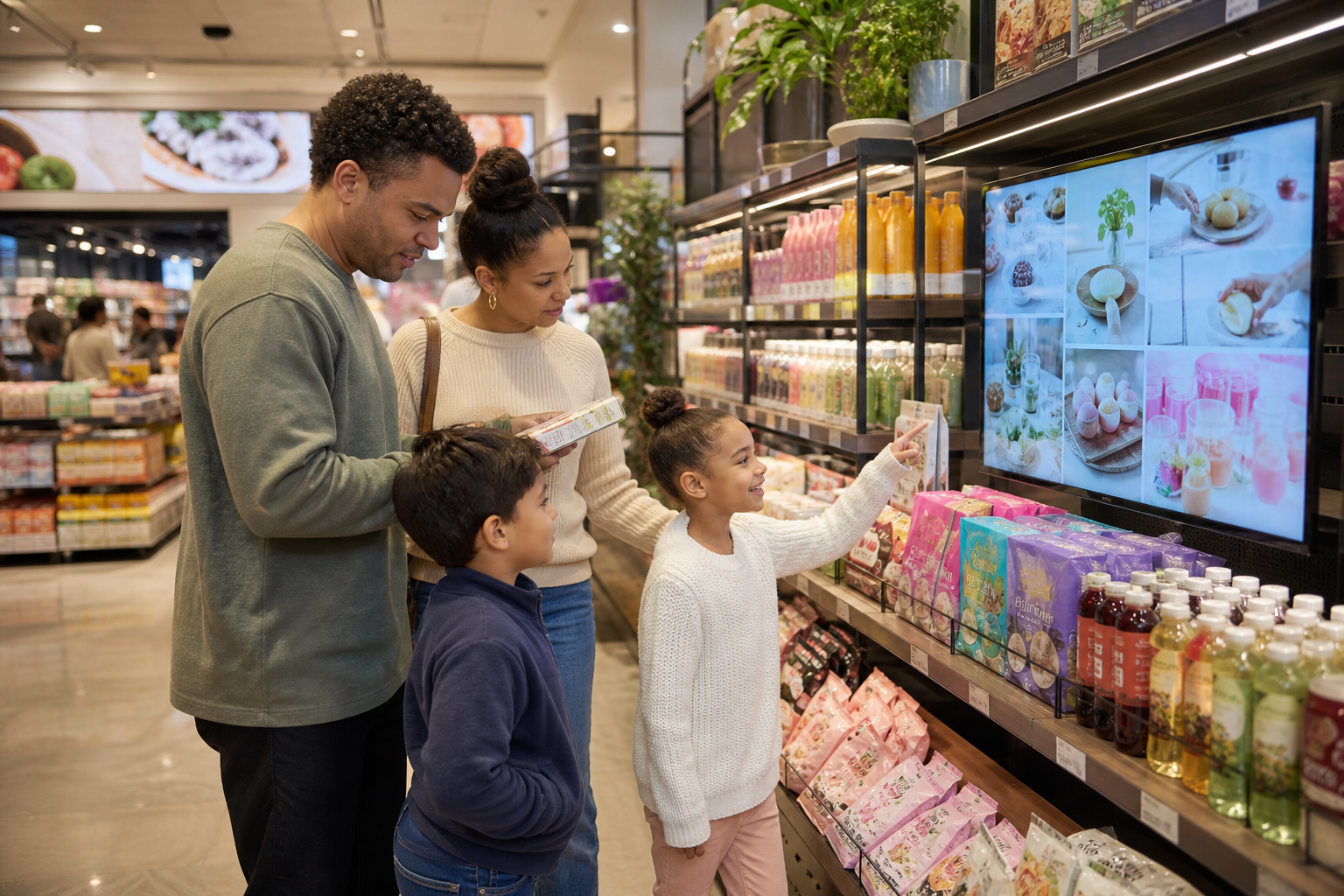

Building the next generation of Japanese food customers in the United States requires more than winning shelf space. Gen Alpha often develops flavor expectations through short videos, creators, games, and group chats before encountering a product in a store. A September 9, 2026 Food Institute article describes how digital culture, customization, global flavors, and influence on parents shape this generation's food choices. That creates an opportunity for Japanese brands, but it does not reduce the need for responsible advertising, accurate labeling, and privacy protection.
Contents
- Demand signals in this week's article
- Why Japanese foods fit the behavior
- Designing an experience chain, not a visual stunt
- Serving the dual customer: child and parent
- Channel, promotion, and measurement
- Legal, labeling, and ethical considerations
- A 90-day validation plan
- Conclusion
1. Demand Signals in This Week's Article
The Food Institute reports that many Gen Alpha consumers discover snacks and drinks through short-form video and creators before they see them in stores. Swicy snacks, prebiotic sodas, and customizable products are shaping young palates, while snacking can act as a prop in gaming and online socializing, not merely a response to hunger. The article also describes Gen Alpha as the most diverse generation in U.S. history, growing up with fewer perceived boundaries between global food cultures.
Two figures deserve attention. The article cites a Mintel forecast that the generation's global spending power could reach $5.5 trillion by 2029, and reports that 73% of parents learn about new or popular products from their children. These are global forecasts and survey findings, not direct measures of U.S. Japanese food sales. Their more useful implication is that discovery may now flow from video to conversation, parental persuasion, and finally the shelf.
That sequence changes the sales job. Historically, an importer could pitch a buyer and let shelf placement create consumer contact. A product now may need a searchable English name, a visibly clear use, parent-facing ingredient and allergen information, and a shareable experience before distribution can translate into velocity.
2. Why Japanese Foods Fit the Behavior
Japanese foods offer many actions that are easy to understand in short video: opening a ramune bottle, stretching mochi, shaking furikake, squeezing a jelly drink, wrapping nori, whisking matcha, or turning takoyaki. The advantage is not visual novelty alone. Product use naturally becomes content even when flavor cannot travel through a screen.
Japanese snacks and drinks also connect readily with season, region, characters, limited flavors, and small packs. These attributes create opportunities to choose, compare, combine, and show friends. Too many choices, however, can fragment inventory and confuse the proposition. An initial set of three options organized around one axis, such as sourness, texture, color, temperature, or topping, is easier to understand and measure.
A globally exposed generation does not require every product to be simplified into sweetness. Ume, yuzu, brown sugar, kinako, nori, dashi, and miso can retain character while heat, salt, serving size, and preparation are adjusted. Ume might enter through gummies, spread, or soda; furikake might be shown on popcorn or roasted vegetables. Familiar product forms can introduce distinctive flavor without erasing it.
3. Designing an Experience Chain, Not a Visual Stunt
Video-oriented planning often overweights color and shape. Purchase depends on a longer chain: discovery, understanding, parental review, availability, opening, eating, and resharing. A failure at any stage can prevent views from becoming repeat purchases. Product briefs should specify the information and action required at each stage.
At discovery, one action should be clear within three seconds: open, shake, mix, wrap, or break. At understanding, the English name should set an accurate expectation for taste and use. A retained Japanese name needs a short aid for pronunciation, flavor, texture, and occasion.
At opening, the physical product must match the video. Invisible contents, unclear count, unexpected color, or a missing tool creates disappointment. At resharing, consumers need room to make a choice. Combining two flavors, adjusting heat, or adding a topping lets them express a preference rather than copy a finished demonstration.
Excessive surprise can weaken repeat. Extreme sourness, heat, or size may earn a single view but fail as an everyday purchase. A hero SKU can balance talk value with a finishable portion, while the core SKU gives people a reason to return on taste and price. Attention and continuity should have separate jobs.
4. Serving the Dual Customer: Child and Parent
The child may discover a Gen Alpha product, but a parent often buys and evaluates safety. A simple fun-front, reassurance-back package is not enough. Parents want to see serving size, ingredients, major allergens, caffeine, heat, and preparation time quickly. Children also use product information to explain their choice. The front, side panel, and product page should present the same facts at different depths.
Soy, wheat, sesame, fish, shellfish, milk, and egg are common across Japanese foods. The United States recognizes nine major food allergens, including sesame. Translating a Japanese label does not by itself ensure that ingredient naming, compound ingredients, production information, or inner and outer packaging meet U.S. requirements. Allergen accuracy and visibility should come before kid-focused promotion.
Nutrition language such as low sugar, high protein, or healthy should not be used casually. The FDA distinguishes nutrient content, health, and other label claims. Spoken video, a product page, and store signage may all matter in the review. Brands should confirm analytical support and obtain qualified regulatory advice rather than using parental anxiety as a sales device.
5. Channel, Promotion, and Measurement
Early tests are easier to interpret across a limited mix of Asian grocery, regional supermarket, confectionery specialty, family venues outside school, and e-commerce. Asian retail shows response among culturally familiar shoppers. Conventional grocery tests whether the product works without explanation. E-commerce can reveal search language, video referrals, and basket combinations. Foodservice can test the product as a beverage or topping and refer guests to a retail pack.
Creator selection should go beyond follower count. Review audience age and geography, comment quality, food-safety behavior, and ability to disclose a commercial relationship clearly. Parent-and-child trials, family-table use, and group taste comparisons can communicate both excitement and parental decision information. Free product and paid relationships need prominent, understandable disclosure.
Measurement begins after the view. Track saves, branded search, store-locator use, coupon redemption, first purchase, second purchase, basket combinations, returns, questions, and allergen-page visits. Retail buyers are more likely to value searches from the relevant trade area and store-level velocity than an undifferentiated national view count.
6. Legal, Labeling, and Ethical Considerations
Advertising to children cannot be treated like adult advertising. The FTC explains that child-directed advertising is evaluated from a child's perspective and that claims must be truthful, non-deceptive, and supported. Influencer and review programs must clearly disclose material relationships.
COPPA may apply when websites, apps, or online services directed to children under 13 collect personal information. Promotions involving entries, uploaded photos, location, device identifiers, or voice require more than a marketing review. Companies should consult FTC resources and qualified U.S. counsel. This article is not legal advice.
Ethically, brands should not turn fear of exclusion into purchase pressure. Limited editions can be enjoyable but can also imply that a child is falling behind without the product. Content that does not require purchase, household substitution ideas, and deliberate age safeguards help protect trust.
7. A 90-Day Validation Plan
In the first 30 days, narrow the portfolio to five SKUs and map the experience from discovery to repeat. Audit U.S. labeling, allergens, nutrition facts, English naming, use instructions, and warnings. Test unassisted comprehension with parents, children, buyers, and store employees.
In the next 30 days, conduct a small test in two regions and roughly two channels. Limit video variations to three per product, with separate roles for opening, customization, and family comparison. Avoid changing price, package, and message all at once so the source of response can be understood.
In the final 30 days, combine sales, repeat, search, questions, returns, and comment data. If attention is high but repeat is low, investigate taste, portion, price, and availability. In retail meetings, show which content contributed to velocity in which stores instead of relying on the generation's large population.
8. Conclusion
Gen Alpha is promising for Japanese food, but posting a colorful snack is not a strategy. Brands must connect a discoverable action, understandable English, parent-verifiable information, availability, and a flavor worth repeating. The screen opens the door; product and supply consistency determine the business result.
With roughly 7,000 Japanese food SKUs, umamill Corp. can help businesses compare snacks, drinks, noodles, furikake, and seasonings suitable for participatory experiences. U.S. marketing and labeling still require qualified review, but a broad assortment can help identify the right SKUs for controlled market tests.
Sources
・“Gen Alpha’s Tastes Start on a Screen,” The Food Institute, September 9, 2026
https://foodinstitute.com/consumerinsights/Gen Alpha-tastes-start-on-screen/
・“Children,” Federal Trade Commission (context)
https://www.ftc.gov/business-guidance/advertising-marketing/children
・“Endorsements, Influencers, and Reviews,” Federal Trade Commission (context)
https://www.ftc.gov/business-guidance/advertising-marketing/endorsements-influencers-reviews
・“Complying with COPPA: Frequently Asked Questions,” Federal Trade Commission (context)
https://www.ftc.gov/business-guidance/resources/complying-coppa-frequently-asked-questions
・“Food Allergies,” U.S. Food and Drug Administration (context)
https://www.fda.gov/food/nutrition-food-labeling-and-critical-foods/food-allergies
・“Label Claims for Food & Dietary Supplements,” U.S. Food and Drug Administration (context)