
Japanese provenance alone does not guarantee that a U.S. shopper will pick a product off the shelf. The Food Institute's report on Shohei Ohtani and Oi Ocha offers a useful case in connecting cultural recognition with discovery, collectibility, zero-sugar product value, and purpose. This article does not propose copying a celebrity campaign. It breaks the case into smaller operating choices that importers can apply at more realistic budgets.
Table of Contents
- What This Week's Article Reported, and What It Does Not Prove
- Fast Meaning Matters More Than Fame
- Build a Product Ladder, Not a One-Off Drop
- Give Retail, E-Commerce, Foodservice, and Events Different Jobs
- Protect Margin and Supply Before the Artwork Goes Live
- Test Small and Identify the Next Core Winner
- Turn a Japanese Story Into an Easy Buying Experience
1. What This Week's Article Reported, and What It Does Not Prove
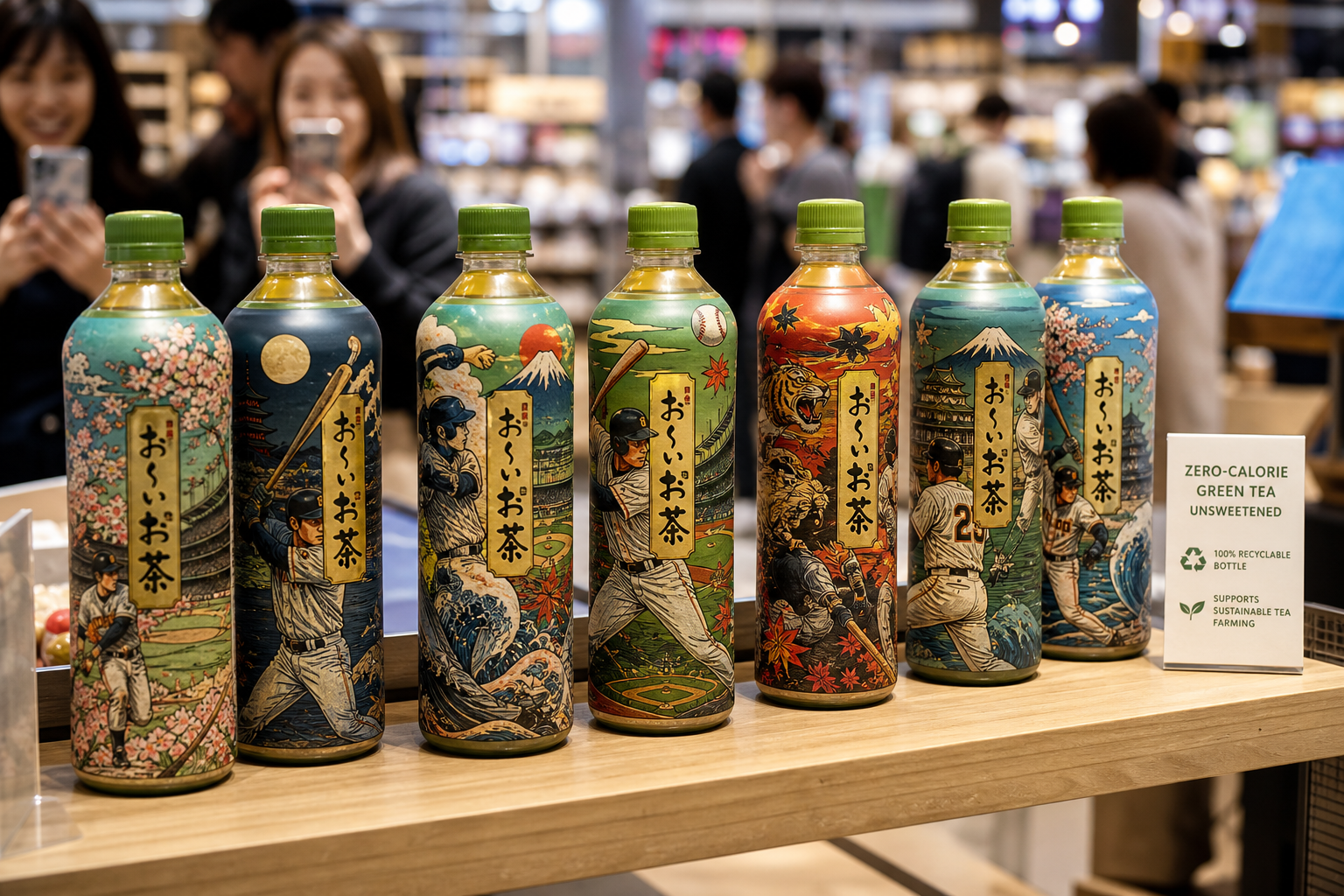
The Food Institute's August 12, 2026 FI Newswire item reported that ITO EN created a '55+8' bottle program tied to Shohei Ohtani's 55 regular-season and eight postseason home runs in 2025. It said official sales began in late June, described Oi Ocha as unsweetened and zero-calorie with about 60 milligrams of caffeine per bottle, and noted continuing environmental initiatives involving Ohtani. The item is based on brand information. It does not provide evidence of incremental U.S. sales, retail distribution gains, or repeat purchase. The responsible business question is therefore not whether the campaign was proven successful, but which hypotheses its design makes testable.
The lesson is deeper than putting a famous face on a bottle. Each package carries a record, number, or moment that gives shoppers a reason to compare designs, choose one, photograph it, or buy more than one. Beverages are bought frequently and judged in seconds. Turning the package into a small media surface can shorten the distance between attention and purchase. For an importer, one instantly understood story at the point of choice may work harder than a dense explanation of heritage that shoppers never stop to read.
2. Fast Meaning Matters More Than Fame
U.S. buyers do not always have time to study the full background of an imported product. Category managers assess price, velocity, shelf role, promotional support, and supply reliability quickly. Consumers also hesitate when they cannot read a name, imagine the flavor, or understand the use. A widely recognized figure such as Ohtani lowers that comprehension cost. Yet an expensive celebrity license is only one route. A regional chef, local sports partnership, cultural festival, Japanese American community organization, or seasonal ritual can perform the same function if it is meaningful to the intended shopper.
A useful campaign has three levels: the recognition asset, the product value, and the purchase reason. Recognition gives the shopper a reason to notice. Product value explains taste, ingredients, process, or attributes such as unsweetened. The purchase reason converts attention through scarcity, a tasting, a set price, or a pairing. If one level is missing, the program may generate conversation without sales, trial without repeat purchase, or strong product satisfaction without discovery. Before borrowing awareness, an importer needs a core product whose quality and price can earn repeat purchase without the promotional wrapper.
3. Build a Product Ladder, Not a One-Off Drop
The assortment is easier to manage when it has four roles: a year-round core item, an accessible trial item, a collectible or seasonal item, and a foodservice format. The core SKU can be replenished continuously. The trial SKU uses a small size, single unit, or approachable price to reduce first-purchase risk. The collectible SKU creates a reason for another trip or multi-unit purchase through numbered labels, regional art, or seasonal designs. The foodservice format allows consumers to learn the flavor outside the home. Importing only the limited item increases risk in both directions: excess inventory if demand is weak and an unrecoverable stockout if the program works. The return path to the core product must be designed before launch.
For green tea, a limited bottle can lead to the same tea in a standard bottle, household tea bags, a complementary hojicha, and restaurant cases. A condiment can move from a small illustrated bottle to the standard size, refill, and foodservice pack. A confection can move from a limited assortment to a core bag of the winning flavor. Changing the artwork must not destabilize UPC management, case packs, shelf life, allergen and nutrition statements, or country-of-origin labeling. Promotional excitement and exact import operations have to coexist.
4. Give Retail, E-Commerce, Foodservice, and Events Different Jobs
In retail, displaying multiple designs can create its own visual block. The execution still has to be easy for store teams. Importers should disclose the design mix per case, build a mixed tray that looks intentional without hand sorting, provide one-sentence English point-of-sale copy, and recommend adjacency to the core SKU. Online, make clear whether designs are random or sold as a complete set. That prevents disappointment when a collector does not receive the expected bottle. Return rules and replacement policies for damaged limited packaging should also be settled in advance.
Foodservice depends less on collecting and more on pairing and experience. Add an unsweetened tea to a lunch bundle, serve a tasting portion, explain its fit with a particular menu item, or create a simple place for guests to photograph the bottle at an event. Sports venues and pop-ups often optimize for awareness, so the path cannot end at the venue. Point guests to a nearby retailer, an online product page, or a next-purchase offer. The same package needs different success measures by channel: retail velocity and reorder, e-commerce acquisition cost and repeat purchase, restaurant attachment rate, and event sampling-to-purchase conversion.
5. Protect Margin and Supply Before the Artwork Goes Live
Limited packaging adds artwork versions, proofing, print minimums, license review, and more complex inventory control. Work backward from the actual sellable window. Map design approval, production, freight, customs clearance, warehouse receipt, retailer setup, launch, and residual inventory disposition on one timeline. Decide what happens if approval is late, whether inventory can revert to a standard label, and whether uneven demand for individual designs can be replenished at the case level. The more collectible the series, the more important it becomes to explain the assortment ratio.
Licensing and labeling require qualified review. Contracts may need to address likeness, trademarks, team or league rights, photography, translation, social use, geography, campaign term, channel, markdowns, and destruction. The U.S. label must remain compliant, and the artwork cannot obscure required information. This article is not legal advice. A health expression accepted in Japan should not automatically be carried into U.S. advertising. Importers should obtain appropriate labeling, advertising, and license review. The cost model should include markdowns, write-offs, approval time, and warehouse SKU handling, not just incremental print cost per unit.
6. Test Small and Identify the Next Core Winner
Before a national program, test two regions, two channels, and two messages. The same unsweetened tea might be framed as 'authentic Japanese tea' in one store and 'an unsweetened refreshment for meals' in another. Compare sampling, conversion, second purchase, and migration to the core SKU. Total limited-edition sales alone cannot tell you whether existing fans stocked up or new households entered the franchise. Combine point-of-sale data, coupons, e-commerce repeat behavior, and store feedback to separate awareness, trial, and retention.
The post-campaign review matters as much as launch. Do not only ask which design sold first. Ask where core velocity improved, which meals created adoption, and where resistance to unsweetened taste declined. Separate the effect of the celebrity, the limited availability, and the product's own fit with an occasion. That learning makes it possible to run the next activation without the same licensing cost. The objective is not a short-lived spike. It is more discovery and repeat purchase for a durable product.
Include execution quality in the analysis. Eye-level refrigeration, a dry endcap, checkout, and the Asian aisle can produce different results with the same campaign. Ask participating stores for periodic display photos and on-hand checks so that non-display and uneven design mixes do not distort the conclusion. Establish baseline velocity for the core item and follow it for four to eight weeks after the limited program ends. Without collecting unnecessary personal information, use receipt-linked offers or short anonymous surveys to ask whether the buyer was new to the brand, how the product tasted, and whether the buyer would purchase the standard pack. That separates the value of visibility, collectibility, and product satisfaction.
7. Turn a Japanese Story Into an Easy Buying Experience
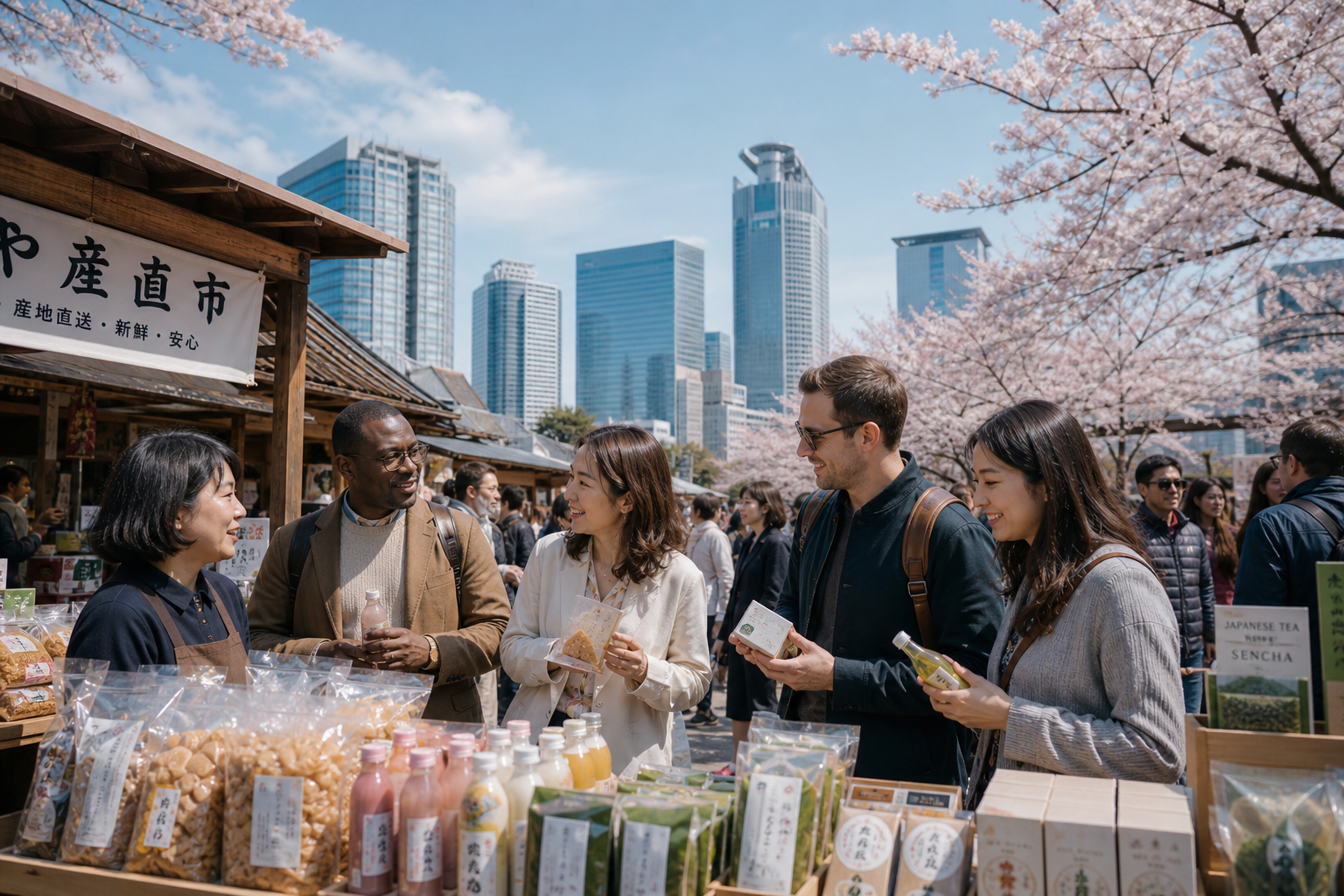
Japanese foods come with rich stories of region, craft, season, and ritual. In the U.S., longer storytelling is not automatically better storytelling. Use a symbol understood in a second at the front, deeper provenance behind a QR code or product page, and tasting to make the flavor credible. The Oi Ocha and Ohtani case is valuable because it converts recognition into a sequence across packaging, unsweetened product value, and environmental activity. Public information still does not establish the sales effect, so every importer needs its own measurement plan.
For businesses exploring Japanese tea, unsweetened beverages, confectionery, or condiments, umamill can be a practical discovery resource. Its lineup of roughly 7,000 SKUs can help teams search for both an accessible campaign entry item and a year-round product that can retain customers after the activation. Start with the person, occasion, price, and path to the core item, rather than starting with the most visible limited package. When story, product, supply, and measurement connect, packaging becomes an investment in market learning rather than a decorative expense.
Five Actions to Take Now
- Assign every SKU one of four roles: core, trial, collectible, or foodservice.
- Separate the recognition asset, product value, and purchase reason on the campaign brief.
- Plan approval, production, freight, retail setup, launch, and residual inventory from the sellable window backward.
- Use channel-specific metrics such as velocity, repeat purchase, attachment rate, and sampling conversion.
- Test in two regions and two channels before scaling, and measure migration from the limited item to the core SKU.
With a broad lineup of roughly 7,000 Japanese food SKUs, umamill can help businesses explore convenience foods, seasonings, snacks, and beverages that fit a defined U.S. Please feel free to contact umamill.
-----------------------------------------------------------------------------
Sources and References
The Food Institute, 'ITO EN, ‘Oi Ocha’ Brand Celebrate Baseball Superstar Shohei Ohtani with New Bottles,' Aug. 12, 2026.
https://foodinstitute.com/press/ito-en-oi-ocha-brand-celebrate-baseball-superstar-shohei-ohtani-with-new-bottles/
ITO EN U.S., 'President's Message' (Ohtani partnership background).
https://itoen.com/pages/presidents-message
ITO EN U.S., 'Oi Ocha Unsweetened Green Tea' product page.
https://itoen.com/products/unsweetened-green-tea